
German
The German language, known as Deutsch in German, is a West Germanic language that is primarily spoken in Germany, Austria, Switzerland, Liechtenstein, Luxembourg, and parts of Belgium and Italy. It is one of the most widely spoken languages in Europe and holds significant cultural and economic importance.
Here are some key features of the German language:
- German uses the Latin alphabet with 26 letters, just like English. However, it includes some additional characters such as the umlauts (ä, ö, ü) and the Eszett (ß), which is a letter representing a double “s” sound.
- German has a phonetic writing system, which means that words are generally pronounced as they are spelled. It has a wide range of vowel and consonant sounds, and the pronunciation can vary across different regions and accents.
- German has a complex grammar system with various verb conjugations, noun declensions, and adjective endings. It features four grammatical cases (nominative, accusative, dative, and genitive) that affect the form of nouns, articles, and adjectives. Word order in German sentences can also differ from English.

Fill This Form And Get A Free Custom Quote Within 4 Minutes
The German language holds significant importance for various reasons:
- Germany is the largest economy in Europe and one of the world’s leading exporters. Proficiency in German opens up a wide range of job opportunities in sectors such as engineering, manufacturing, automotive, finance, technology, and research. Many multinational companies have operations in Germany, and German language skills are highly valued in business and professional settings.
- Germany is renowned for its high-quality education system and offers numerous opportunities for international students. German universities are highly regarded and offer a wide range of academic programs, including tuition-free or low-cost education. Proficiency in German is often required or beneficial for studying in Germany, accessing scholarship programs, and conducting research in various fields.
- Scientific and Technological Advancements: Germany is known for its contributions to scientific research and technological innovation. Many groundbreaking discoveries and inventions have originated from German-speaking countries. Proficiency in German allows access to scientific literature, research collaborations, and academic networks in fields such as engineering, medicine, physics, chemistry, and computer science.
- The German language is closely tied to the rich cultural heritage of Germany, Austria, Switzerland, and other German-speaking regions. Proficiency in German allows for a deeper appreciation of influential works of literature, philosophy, music, and art. It enables individuals to engage directly with the original texts, music compositions, and artistic expressions of German-speaking culture.
- Germany is a popular tourist destination, known for its historic cities, picturesque landscapes, castles, museums, and cultural events. Proficiency in German enhances travel experiences, enabling better communication with locals, understanding of cultural nuances, and exploration of off-the-beaten-path destinations. It allows for a more immersive and authentic travel experience in German-speaking countries.


| Documents For Translation | Starting Price in AUD (inclusive of GST) |
| NAATI Certified Birth Translation | AU$ 59.00 |
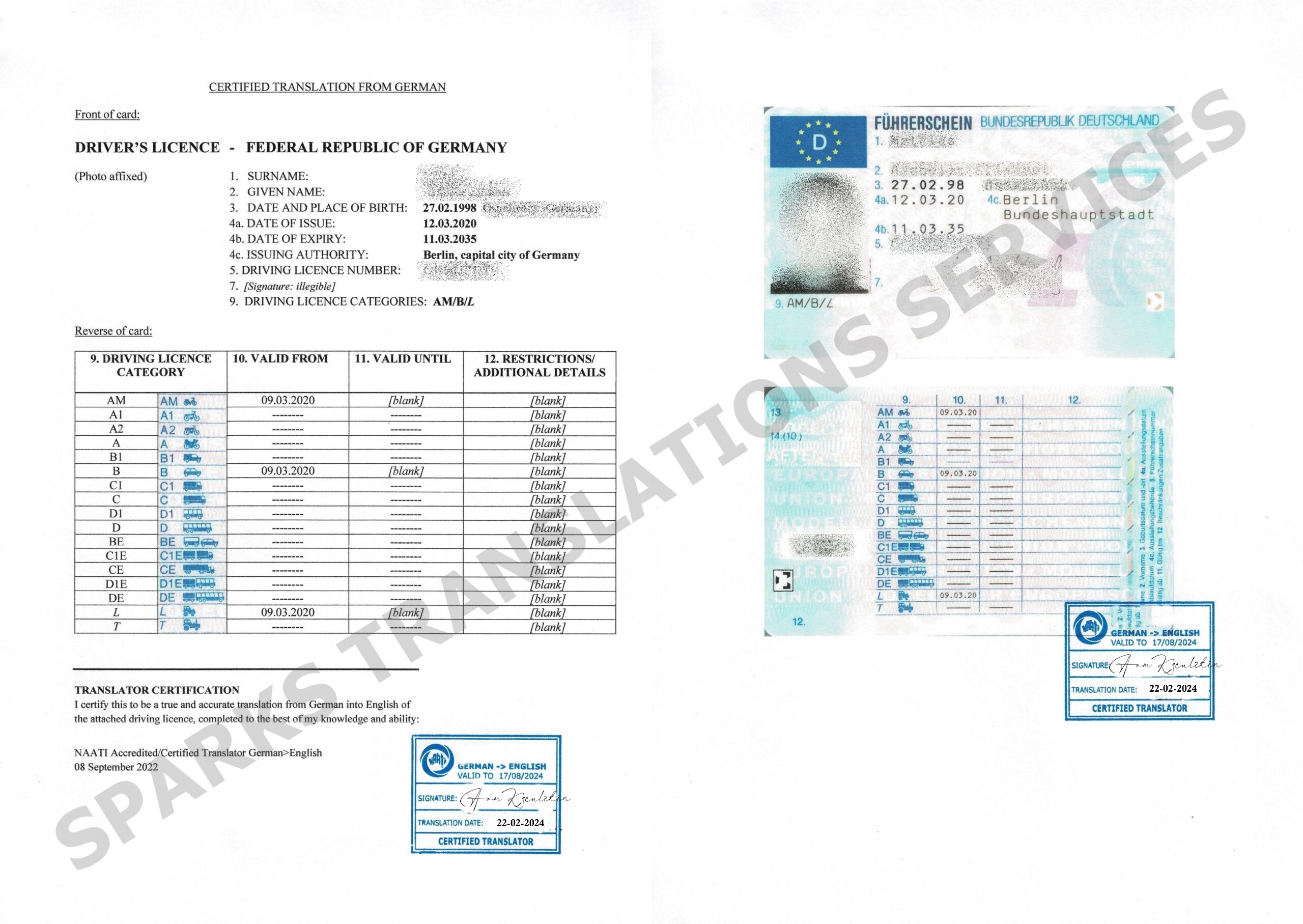
| NAATI Certified Driver’s License Translation | AU$ 59.00 |
| NAATI Certified Marriage Certificate Translation | AU$ 59.00 |
-
 0+
0+Scan and upload a copy of the desired documents on our website.
-
 0+
0+Fill in the online application form to get the quotation.
-
 0+
0+Pay for the service through visa, credit, or debit card and confirm your order.
-
 0+
0+Receive your work within the specified time mentioned by our experts.


