
Estonian
The Estonian language, known as eesti keel in Estonian, is the official language of Estonia. It belongs to the Finno-Ugric branch of the Uralic language family and is closely related to Finnish and distantly related to Hungarian. Estonian is primarily spoken in Estonia, a country located in Northern Europe.
Here are some key features of the Estonian language:
- Estonian uses a modified Latin alphabet consisting of 27 letters. It includes diacritical marks such as umlauts (ä, ö, ü) and a grave accent (õ) that affect the pronunciation of the letters.
- Estonian has a phonetic writing system, which means that words are generally pronounced as they are spelled. It has a relatively simple sound system with 9 vowels and 18 consonants. Stress in Estonian words usually falls on the first syllable.
- Estonian has a highly agglutinative grammar, where words are formed by adding various suffixes to the root word. It has 14 cases, including nominative, genitive, partitive, and accusative, among others. Noun and adjective declensions, verb conjugations, and extensive use of suffixes are characteristic features of Estonian grammar.

Fill This Form And Get A Free Custom Quote Within 4 Minutes
The Estonian language holds significant importance for several reasons:
- Estonian is the cornerstone of Estonian national identity. It plays a crucial role in preserving and promoting Estonian culture, history, and traditions. Proficiency in Estonian fosters a sense of belonging, pride, and cultural heritage among the Estonian people.
- Estonian is the primary language used for communication within Estonia. Knowledge of Estonian is essential for effective communication and social integration in various aspects of daily life, including education, employment, government services, and community interactions.
- Estonian is the language of instruction in Estonian schools and universities. Proficiency in Estonian is necessary for academic success, literacy development, and the acquisition of knowledge across different subjects. It enables individuals to fully engage in educational opportunities and contribute to the intellectual and cultural development of society.
- The Estonian language is vital for preserving and promoting Estonian cultural heritage. It serves as a medium for transmitting traditional customs, folklore, literature, music, and other forms of artistic expression. Proficiency in Estonian enables the preservation of unique cultural practices and ensures the continuity of Estonian traditions for future generations.
- Proficiency in Estonian provides individuals with greater access to opportunities within Estonia. It is often a requirement for employment, particularly in roles that involve interaction with the local population. Fluency in Estonian enhances career prospects, promotes upward mobility, and fosters economic integration within the country.
| Documents For Translation | Starting Price in AUD (inclusive of GST) |
| NAATI Certified Birth Translation | AU$ 59.00 |
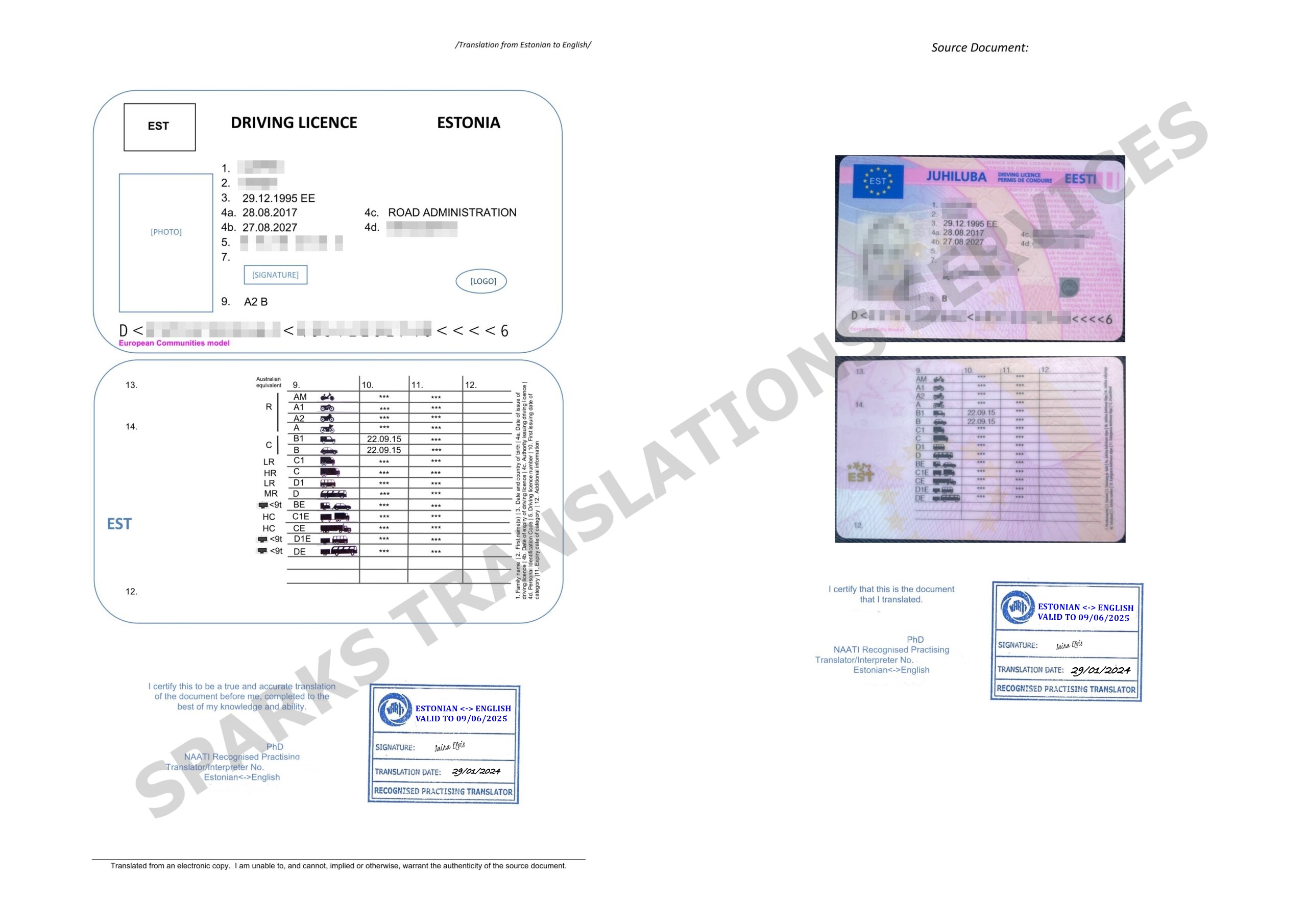
| NAATI Certified Driver’s License Translation | AU$ 59.00 |
| NAATI Certified Marriage Certificate Translation | AU$ 59.00 |
-
 0+
0+Scan and upload a copy of the desired documents on our website.
-
 0+
0+Fill in the online application form to get the quotation.
-
 0+
0+Pay for the service through visa, credit, or debit card and confirm your order.
-
 0+
0+Receive your work within the specified time mentioned by our experts.


